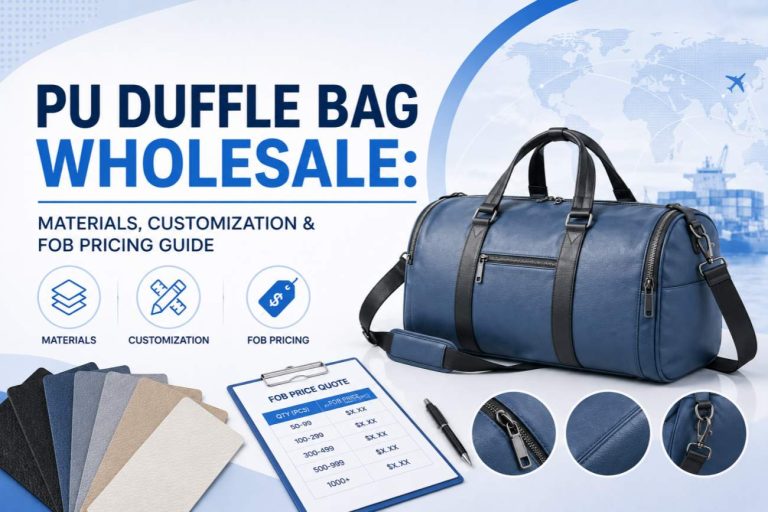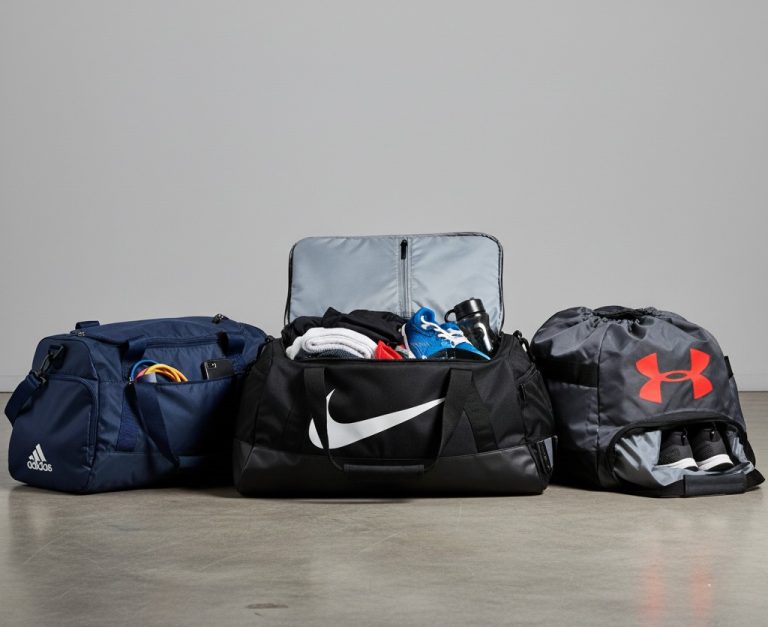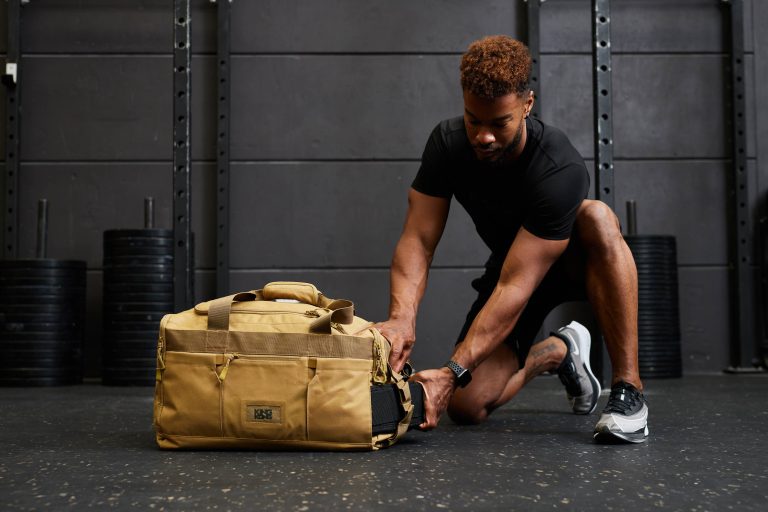

If you are sourcing bags for wholesale, one of the first decisions you will face is travel bag vs duffle bag. At first glance, they look similar — both are soft-sided bags designed for carrying belongings. But the differences in structure, target market, material requirements, and production complexity are significant enough to affect your inventory strategy, profit margins, and supplier relationships.
The global travel bag market was valued at approximately USD 21.5 billion in 2025, with duffle bags growing at a projected CAGR of 9.3% — outpacing many other luggage sub-categories (Future Market Insights, 2025; Grand View Research, 2024). Both categories offer strong opportunities, but they serve different buyers and require different manufacturing approaches.
This guide breaks down the 5 key differences between travel bags and duffle bags from a wholesale buyer’s perspective — not as a consumer shopping comparison, but as a sourcing decision framework.
1. Design & Structure: One-Compartment vs Multi-Compartment
A duffle bag and a travel bag differ fundamentally in their internal structure — and that difference directly affects your manufacturing cost. Duffle bags feature a single, wide-open compartment designed for bulk packing. Think of it as a cylindrical or rectangular sack with a top zipper. Travel bags, by contrast, have multiple compartments, organizer pockets, and often a dedicated laptop or tablet sleeve.
From a production standpoint, this structural difference translates into:
- More cutting and sewing steps for travel bags: Each additional pocket, divider, and zipper compartment requires extra pattern pieces, more lining material, and additional assembly time. A basic duffle bag may involve 15-20 pattern pieces, while a multi-compartment travel bag can require 35-50 pieces.
- Higher labor cost for travel bags: The additional assembly steps increase production time by approximately 30-50%. A duffle bag might take 25-35 minutes to sew; a comparable travel bag can take 45-60 minutes.
- Material cost difference: Travel bags consume more lining fabric, more zippers (often 3-5 vs 1-2 for duffles), and more hardware (buckles, D-rings, webbing).
What this means for you as a buyer: Expect the FOB price of a travel bag to be $2-5 higher per unit than a comparable duffle bag, driven primarily by the additional labor and materials. Duffle bags offer a lower entry price point and faster production, making them ideal for first-time importers or price-sensitive markets. Travel bags command higher retail prices but require more upfront investment in design and sampling.
2. Target Market & Use Case: Who Buys Which?
The end customer for a duffle bag is often completely different from the customer for a travel bag. Understanding this distinction is critical — sourcing the wrong style for your target market will result in slow inventory turnover and forced discounting.
| Dimension | Duffle Bag | Travel Bag |
|---|---|---|
| Primary customers | Gym-goers, sports teams, weekend travelers, students, promotional buyers | Business travelers, frequent flyers, digital nomads, commuters, vacation travelers |
| Typical retail price | $20 – $80 (mass market) | $40 – $200 (mid to premium) |
| Sales channels | Sporting goods stores, gym chains, promotional product distributors, Amazon | Department stores, travel retail, luggage specialty stores, DTC brands |
| Profit margin (retail) | 15-25% (lower margin, faster turnover) | 25-40% (higher margin, slower turnover) |
| Order pattern | Larger volumes, seasonal peaks (New Year fitness, back-to-school) | Steady year-round, with peaks around holiday travel season |
If your buyers are promotional product distributors or sports retailers, duffle bags are the logical choice. If you serve luggage brands, travel accessory retailers, or corporate travel programs, travel bags offer better margin potential and brand positioning.
3. Material & Durability Requirements
Duffle bags and travel bags demand different material specifications because they face different wear patterns. Duffle bags are often thrown into car trunks, stored in gym lockers, and dragged across floors — they need heavy-duty abrasion resistance. Travel bags, while also needing durability, prioritize appearance and organization features over brute toughness.
| Specification | Duffle Bag | Travel Bag |
|---|---|---|
| Recommended fabric | 600D – 900D polyester, nylon ripstop, heavy canvas | Nylon ripstop, PU leather, polyester twill, lightweight canvas |
| Fabric cost range | $3 – $6 per yard | $4 – $12 per yard |
| Zipper specification | #8 – #10 (heavy duty), YKK preferred | #5 – #8 (standard to medium), YKK or equivalent |
| Water resistance | Essential — PU coating or PVC backing | Desirable but not critical for all styles |
| Key stress points | Strap anchors, base panel, zipper ends | Handle attachments, shoulder strap webbing, pocket corners |
Hardware quality is non-negotiable for both. Weak zippers are the #1 cause of returns for both categories. Always specify YKK zippers or an equivalent brand, and require buckle break-strength testing for strap hardware. A reputable duffle bag manufacturer will provide material specification sheets and test reports on request.
4. Customization Flexibility: OEM/ODM Differences
Duffle bags are generally easier and faster to customize than travel bags — making them an excellent choice for first-time importers or promotional buyers. The simpler structure means fewer variables to manage during the sample development and production phases.
For duffle bags (OEM/ODM):
- Abundant ODM stock designs available — the promotional product market is large and well-established
- Custom logo application is straightforward: embroidery, screen printing, or heat transfer on the side panels or front face
- Sample development: 7-10 working days
- Lower MOQ for custom colors and logo placement (300-500 pcs)
For travel bags (OEM/ODM):
- Fewer ODM stock designs — the market skews toward branded products with specific interior organization
- Customization requires more detailed tech packs: pocket dimensions, divider placement, laptop sleeve sizing
- Sample development: 10-15 working days (more revision rounds typically needed)
- Higher MOQ for fully custom designs (500-1,000 pcs)
However, travel bags offer stronger differentiation. A well-designed travel bag with unique organization features creates a stronger brand identity than a custom duffle bag, which is harder to differentiate from competitors. For a detailed look at the OEM/ODM process across bag categories, see our complete custom bag guide.
5. Shipping & Logistics: Size Matters
Duffle bags have a significant logistics advantage: they compress. Most duffle bags are designed with soft, flexible sides that can be folded or rolled down to a fraction of their filled volume. Structured travel bags — especially those with padded laptop compartments, reinforced bottoms, or semi-hard back panels — cannot compress as much.
This difference has real cost implications at scale:
- 20-foot container capacity: Compressed duffle bags: approximately 3,000-4,000 units. Structured travel bags: approximately 1,500-2,000 units (depending on dimensions).
- Sea freight cost per unit: Duffle bags: approximately $0.80-1.50. Travel bags: approximately $1.50-3.00.
- Warehouse storage: Duffle bags can be stored flat in bulk. Travel bags often require rack storage to maintain shape — increasing warehousing cost by 30-50%.
This doesn’t make travel bags a bad choice — it just means you need to factor logistics cost into your unit economics. If you’re comparing FOB prices, remember that the landed cost difference narrows when duffle bags are shipped compressed and travel bags are shipped inflated. Ask your manufacturer for the packed carton dimensions and CBM (cubic meter) per 1,000 units before making your final decision.
Quick Comparison Table: Travel Bag vs Duffle Bag
At a glance, here is how the two categories stack up across the five key dimensions every wholesale buyer should evaluate:
| Dimension | Duffle Bag | Travel Bag |
|---|---|---|
| 1. Design & Structure | ✅ Single compartment, simple construction. Faster to produce, lower labor cost. | ⬆️ Multi-compartment, complex construction. Higher perceived value, more design flexibility. |
| 2. Target Market | ✅ Best for: gym, sports, promotional, students, weekend travel. Lower retail price, faster turnover. | ✅ Best for: business travel, commuting, vacation. Higher retail price, better margins. |
| 3. Material Needs | ✅ Heavy-duty fabrics (600-900D polyester), #8-#10 zippers, water resistance essential. | ⬆️ Mid-range fabrics (nylon, PU leather, lightweight canvas), #5-#8 zippers, appearance matters more. |
| 4. Customization | ✅ Easier ODM/OEM. Faster sampling (7-10 days). Lower MOQ. Ideal for promotional & branded programs. | ⬆️ More complex OEM. Slower sampling (10-15 days). Higher MOQ. Stronger brand differentiation potential. |
| 5. Shipping Cost | ✅ Lower logistics cost. Compressible. 3,000-4,000 pcs per 20′ container. $0.80-1.50/unit sea freight. | ⬆️ Higher logistics cost. Shape-retaining. 1,500-2,000 pcs per 20′ container. $1.50-3.00/unit sea freight. |
✅ = advantage in this category | ⬆️ = trade-off to consider
Conclusion: Which Should You Source?
There is no universal “better” choice between travel bags and duffle bags — the right decision depends on your target market and business model.
If you are looking for a lower-risk entry point with faster production cycles and a proven mass-market demand, start with duffle bags. They are easier to customize, cheaper to ship, and appeal to a broad customer base from gym-goers to promotional buyers.
If your customers expect premium features — laptop compartments, organized interiors, professional aesthetics — and you have the budget for more complex sampling and higher MOQ, travel bags offer stronger margins and brand differentiation.
The best strategy: Many successful wholesale buyers source both categories from the same manufacturer. This gives you a wider product range to offer your customers, better negotiating leverage on combined order volumes, and the ability to cross-sell — a customer buying duffle bags for their fitness line may also need travel bags for their business travel segment. To see what’s possible in both categories, explore our duffle bag collection or contact us to discuss your sourcing needs.
References
- Future Market Insights. (2025). Travel Bags Market Size and Share Forecast Outlook 2025 to 2035. futuremarketinsights.com
- Grand View Research. (2024). Duffel Bags Market Growth & Trends — cited via Accio market analysis.
- Mordor Intelligence. (2026). Travel Bag Market Size & Share Analysis (2026-2031). mordorintelligence.com