Estimated Reading Time: 5 minutes
Table of Contents
- Introduction
- Why These Questions Matter
- 1. Are You a Factory or a Trading Company?
- 2. What Is Your Sample Process?
- 3. What Are Your MOQ Requirements?
- 4. How Do You Handle Quality Control?
- 5. What Certifications Do You Have?
- 6. What Is the Production Lead Time?
- 7. What Are Your Payment Terms?
- 8. How Do You Protect My Design IP?
- 9. Can You Provide References or Case Studies?
- 10. What Is Included in the Quotation?
- Conclusion
Introduction
Finding the right bag supplier can make or break your product launch. Whether you’re launching a new brand or expanding your product line, the supplier you choose impacts quality, timelines, and ultimately your brand reputation. Yet many buyers jump into orders without asking the critical questions that could prevent costly mistakes [1].
Based on our years of experience working with brands worldwide, we’ve compiled the definitive list of questions every smart buyer asks before placing an order. These questions protect your investment and ensure you’re partnering with a supplier who can deliver on their promises.
Why These Questions Matter
The difference between a successful product launch and a nightmare scenario often comes down to information gathered before signing contracts. Suppliers who are transparent and experienced welcome these questions—it’s a sign you’re a serious buyer. Those who evade or pressure you to skip due diligence are often hiding problems [2].
Asking the right questions accomplishes several goals: it verifies the supplier’s capabilities, establishes clear expectations, creates documentation for accountability, and builds the foundation for a professional working relationship. Let’s dive into the ten essential questions you need answered.
1. Are You a Factory or a Trading Company?
This fundamental question determines your pricing and communication structure. A factory manufactures products directly, while a trading company acts as an intermediary—typically adding 15-30% margin to factory prices [3].
Why it matters: Trading companies offer convenience but at higher costs. Factories provide better pricing but require more communication management. Some suppliers misrepresent themselves, so ask for factory photos, business license, and production facility verification.
Follow-up question: What processes do you handle in-house versus outsource? This reveals their actual production capabilities.
2. What Is Your Sample Process?
Understanding the sample process prevents quality disputes later. Professional suppliers have structured sample workflows: initial sample, revision rounds, and golden sample (production benchmark) [4].
Key questions to ask:
- How many sample revisions are included?
- What is the sample fee and lead time?
- Who pays for shipping?
- What is your golden sample approval process?
Red flag: Suppliers who won’t provide samples or skip the golden sample approval process. The golden sample is your legal quality benchmark—without it, you have no standard to enforce quality requirements [5].
3. What Are Your MOQ Requirements?
Minimum Order Quantity (MOQ) directly impacts your cash flow and risk exposure. Understanding MOQ helps you plan orders realistically.
| Order Type | Typical MOQ Range | Price Impact |
|---|---|---|
| Stock/Catalog items | 50-100 pcs | Standard pricing |
| Custom colors | 200-500 pcs | 10-20% premium |
| Custom materials | 500-1000 pcs | 20-40% premium |
Pro tip: Ask if MOQ is negotiable for first orders or if they offer mixed-color orders. Building a relationship often leads to more flexible terms.
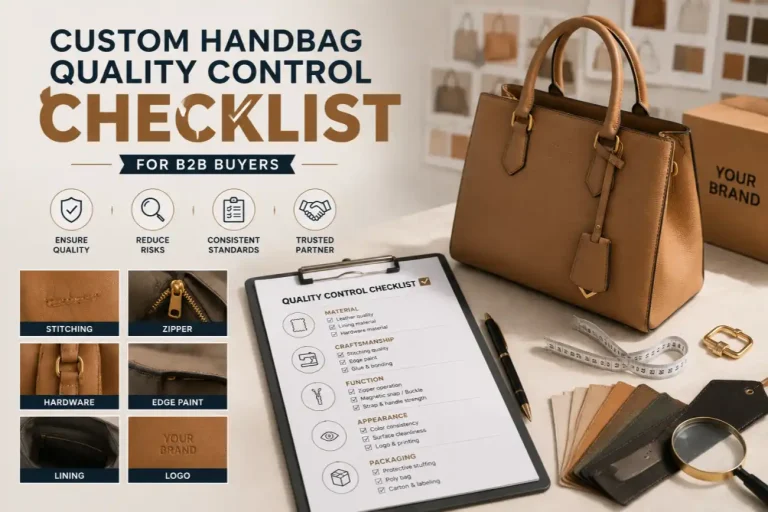
4. How Do You Handle Quality Control?
Quality control separates professional suppliers from problematic ones. Ask about their specific QC procedures and documentation practices [6].
What to ask:
- What percentage of orders do you inspect?
- Do you provide inspection reports with photos?
- What is your defect tolerance rate?
- Who bears the cost of quality issues found in inspection?
Best practice: Request third-party inspection for orders over $5,000. It’s a small investment that prevents major problems. Professional suppliers expect and accommodate this request.
5. What Certifications Do You Have?
Certifications prove a supplier meets international standards—a critical requirement for market compliance and corporate responsibility [7].
Essential certifications to verify:
- ISO 9001: Quality management system
- BSCI/SEDEX: Social compliance for labor practices
- OEKO-TEX: Textile safety (no harmful substances)
- REACH: Chemical safety compliance
Important: Request current certificates and verify their validity through issuing organizations. Fake certificates unfortunately exist in the industry.
6. What Is the Production Lead Time?
Lead time directly impacts your inventory planning and launch timeline. Understand the full timeline from confirmation to delivery.
Questions to clarify:
- What is the production time after sample approval?
- How long does material sourcing take?
- What causes delays, and how do you communicate them?
- Can you accommodate rush orders, and what’s the premium?
Typical timelines:
- Sample development: 7-14 days
- Bulk production: 20-30 days (under 1000 pcs)
- Shipping: 20-40 days (sea freight)
7. What Are Your Payment Terms?
Payment terms affect your cash flow and represent a significant risk factor. Get clarity upfront to avoid surprises.
Standard industry terms:
- New customers: 30-50% deposit, 70% before shipment
- Established relationships: Net 30-60 terms possible
- Small orders: 100% payment often required
Critical questions:
- Is the deposit refundable if orders cancel?
- What payment methods do you accept?
- Do you offer trade assurance or escrow services?
Red flag: Suppliers demanding 100% upfront payment without established relationships. This is unusually risky.
8. How Do You Protect My Design IP?
Intellectual property protection is crucial for brands investing in unique designs. Your designs are valuable assets that need protection.
What to ask:
- Will you sign an NDA (Non-Disclosure Agreement)?
- How do you ensure design confidentiality?
- Do you ever produce similar designs for other clients?
- What happens if IP infringement occurs?
Contract essentials: Your agreement should explicitly state that designs remain your property, suppliers cannot sell your designs to others, and penalties for IP violations are defined [8].
9. Can You Provide References or Case Studies?
Past performance predicts future results. References and case studies demonstrate a supplier’s experience and reliability.
What to request:
- References from similar brands or industries
- Case studies of successful product launches
- Portfolio of similar products they’ve manufactured
- Permission to contact existing clients
What to ask references:
- Was quality consistent throughout the order?
- Were timelines met?
- How were problems handled?
- Would you order from them again?
10. What Is Included in the Quotation?
Comparing quotes requires understanding what’s included. The lowest quote often isn’t the best value.
Items to verify in quotes:
- Product unit price (FOB or CIF?)
- Tooling/mold costs
- Sample fees and their deductibility
- Packaging costs (polybag, box, hang tag)
- Inspection costs
- Any hidden fees or surcharges
Critical distinction: FOB (Free on Board) excludes shipping and insurance. CIF (Cost, Insurance, Freight) includes shipping to destination port. Always compare the same shipping terms.
Conclusion
Asking these ten questions before placing your first order isn’t about distrust—it’s about establishing a professional foundation for success. The best supplier relationships are built on transparency, clear communication, and mutual understanding of expectations.
Take time to evaluate answers carefully. Suppliers who answer thoroughly and confidently are more likely to deliver quality products. Those who pressure you to skip due diligence or provide vague answers should raise red flags.
Remember: the cost of asking questions upfront is minimal compared to the cost of fixing problems after production. Invest this time wisely to protect your brand and your investment.
Ready to start your bag sourcing journey with a reliable partner? Connect with our team. We’re transparent about our capabilities, processes, and happy to answer all your questions.
Related articles: Private Label Bags Complete Guide, How to Find Handbag Manufacturers, Custom Tote Bags: Materials, Costs & MOQ
References