Estimated Reading Time: 6 minutes
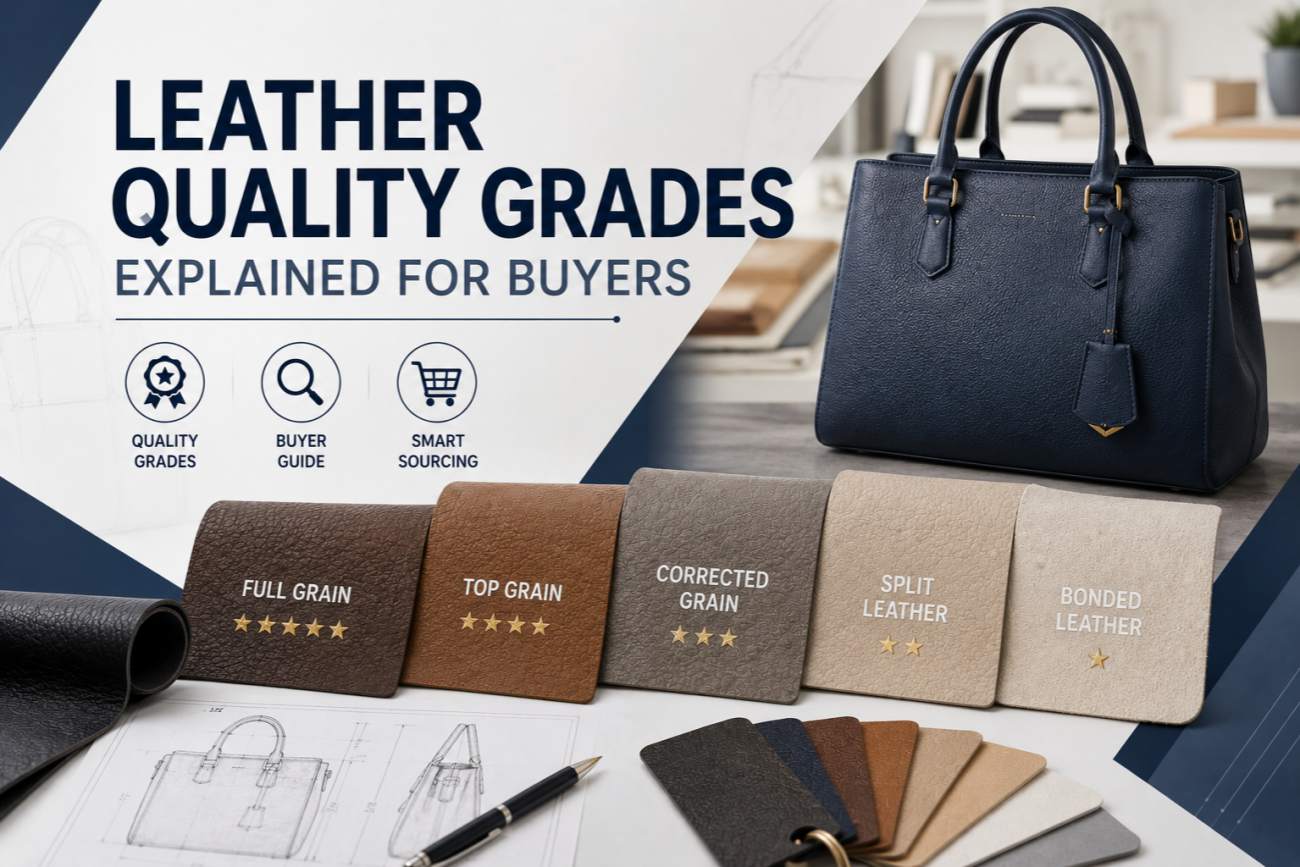
Leather quality grades determine everything about your bag — the cost, the durability, the price you can charge, and how long your customers will keep it. Yet many first-time importers focus on style and price first, only to realize later that the material grade they chose does not match their brand positioning. In this guide, we explain the five leather quality grades from a manufacturer’s perspective so you can make an informed sourcing decision for your bag line.
H2-1: What Are Leather Quality Grades and Why Should Bag Buyers Care?
Leather quality grades refer to how much of the original animal hide is retained and how it is processed. From a manufacturer’s standpoint, the grade determines:
- Cost per square foot — Higher grades use more of the original hide and require more skilled cutting.
- Durability — A higher-grade leather bag can last decades; a lower grade may show wear in two to three years.
- MOQ flexibility — Premium grades usually require larger minimum orders because hide selection is more complex.
In our experience working with bag brands, one common mistake we see is buyers choosing a grade based solely on the name without understanding what it actually means. For instance, “Genuine Leather” sounds premium, but it is actually an entry-level grade. Knowing these distinctions early saves you from costly product returns and brand reputation damage later.
If you are new to bag manufacturing, read our OEM Bag Production Guide first for an overview of the entire development process.
H2-2: The 5 Leather Grades Every Bag Importer Needs to Know
Leather grading can vary slightly by tannery, but the industry generally recognizes five tiers. Below is what each grade means, what it is best for, and what to watch out for.
Full-Grain Leather — The Premium Choice for High-End Bags
Full-grain leather uses the top layer of the hide with its natural grain intact. It is the strongest and most durable leather grade because the natural纤维 structure is unbroken. Over time, it develops a patina that many customers love. However, it is expensive and includes natural markings — scars, wrinkles, insect bites — that not every brand wants.
Best for: Premium handbags, luxury limited editions, high-margin brand lines.
Sourcing note: If you go with full-grain, ask for “selected cut” or “top cut” to reduce the natural flaw rate. Expect MOQ of 500+ units. For a deeper comparison, see our Full-Grain vs Top-Grain Leather Guide.
Top-Grain Leather — The Most Popular Choice for Mid-to-High Range Bags
Top-grain leather is full-grain hide that has been lightly sanded to remove surface imperfections. This gives it a more uniform appearance at a lower cost. It strikes the best balance between quality and affordability, which is why it is the most common choice for OEM bag orders.
Best for: Mid-to-premium brand lines, wholesale orders, core product collections.
Sourcing note: MOQ typically starts at 300+ units. This grade accepts embossing and printed surface treatments well, giving you design flexibility.
Genuine Leather — The Entry-Level Natural Leather
Despite its name, “Genuine Leather” is actually the lowest grade of real leather. It comes from the layers below the top grain and is heavily sanded, buffed, and coated to create a uniform surface. It is affordable but significantly less durable — the coating can crack over time.
Best for: Budget-friendly lines, promotional items, accessories like belts and wallets.
Sourcing note: If your brand is positioned at mid-range or above, we recommend using genuine leather only for small leather goods, not mainline handbags.
Bonded Leather — What to Know Before Using It
Bonded leather is not a natural leather — it is made from leather scraps ground up and bonded together with polyurethane. It has a leather-like appearance but much lower durability. In our experience, bonded leather bags often start peeling after 2-3 years of regular use.
Best for: Ultra-low-cost products, single-season fast fashion items.
Sourcing note: We do not recommend bonded leather for brands that want repeat customers. It can damage your brand reputation if buyers expect leather quality.
PU (Faux) Leather — A Cost-Effective Alternative Worth Considering
PU leather is 100% synthetic but has improved significantly in quality over the past decade. High-end PU leather now closely mimics the hand feel and appearance of real leather. More importantly, it offers cost stability — real leather prices fluctuate with the hide market, while PU prices stay consistent. Many US brands now actively request PU for vegan lines and fast-fashion collections.
Best for: Vegan brands, entry-level price points, high-volume fast-fashion lines.
Sourcing note: PU has the lowest MOQ — typically 100-200 units, making it ideal for testing new designs. See our Custom PU Leather Bags page for more details.
H2-3: Cost, MOQ & Lead Time — How Leather Grade Impacts Your Bag Project
Here is a quick reference table showing how grade selection affects real production parameters:
| Grade | Relative Material Cost | Typical MOQ | Extra Lead Time (vs PU) |
|---|---|---|---|
| Full-Grain | Highest (3-5× PU) | 500+ pcs | +10-14 days |
| Top-Grain | Moderate (2-3× PU) | 300+ pcs | +7-10 days |
| Genuine Leather | Low (1.5-2× PU) | 200+ pcs | +5-7 days |
| Bonded Leather | Lowest (similar to PU) | 200+ pcs | +3-5 days |
| PU Leather | Baseline | 100-200 pcs | Baseline |
Real leather adds time because it requires manual hide inspection, grain direction matching, and more complex cutting. For a full breakdown of how MOQ is calculated for different materials, see our Bag MOQ Guide.
H2-4: How to Choose the Right Grade + Avoid Common Quality Traps
The simplest way to choose a grade is to work backward from your target retail price:
- Under $50 retail → PU leather or genuine leather. The margin does not support premium materials.
- $50-$150 retail → Top-grain leather. This is the sweet spot for most wholesale and private label bag brands.
- $150+ retail → Full-grain leather or high-end top-grain. Your customers expect luxury-level durability.
Common quality traps to watch for:
One issue we see frequently is buyers approving a sample made in full-grain, then receiving mass production in genuine leather — the surface look can be similar, but the durability difference is huge. Always request a pre-production sample in your chosen grade and keep a leather swatch archive for reference.
For PU leather, ask for a cold crack test and abrasion test before confirming bulk production. Low-quality PU can stiffen and crack in cold weather.
For a full checklist, download our Bag Quality Control Checklist.
H2-5: Conclusion — Start Your Custom Bag Project with the Right Leather
There is no single “best” leather grade. The right choice depends on your brand’s price positioning, target customer expectations, and order volume. Full-grain gives you premium quality but requires higher investment. Top-grain offers the best balance. PU gives you flexibility and lower risk for testing new markets.
The key is to start your sourcing conversation by telling your manufacturer your target retail price and brand tier. This allows them to recommend the most cost-effective grade that delivers the right customer experience.
Ready to start your bag project? Contact us for a free leather grade consultation and sample swatch kit. We work with all five grades and can help you match the perfect material to your brand.