Estimated reading time: 8 minutes
If you have already read general comparisons between microfiber and PU leather, you know that microfiber is more durable and feels closer to real leather, while PU is more affordable and comes in a wider color range. But knowing the difference between the two materials is not the same as knowing which one to use for your specific bag type.
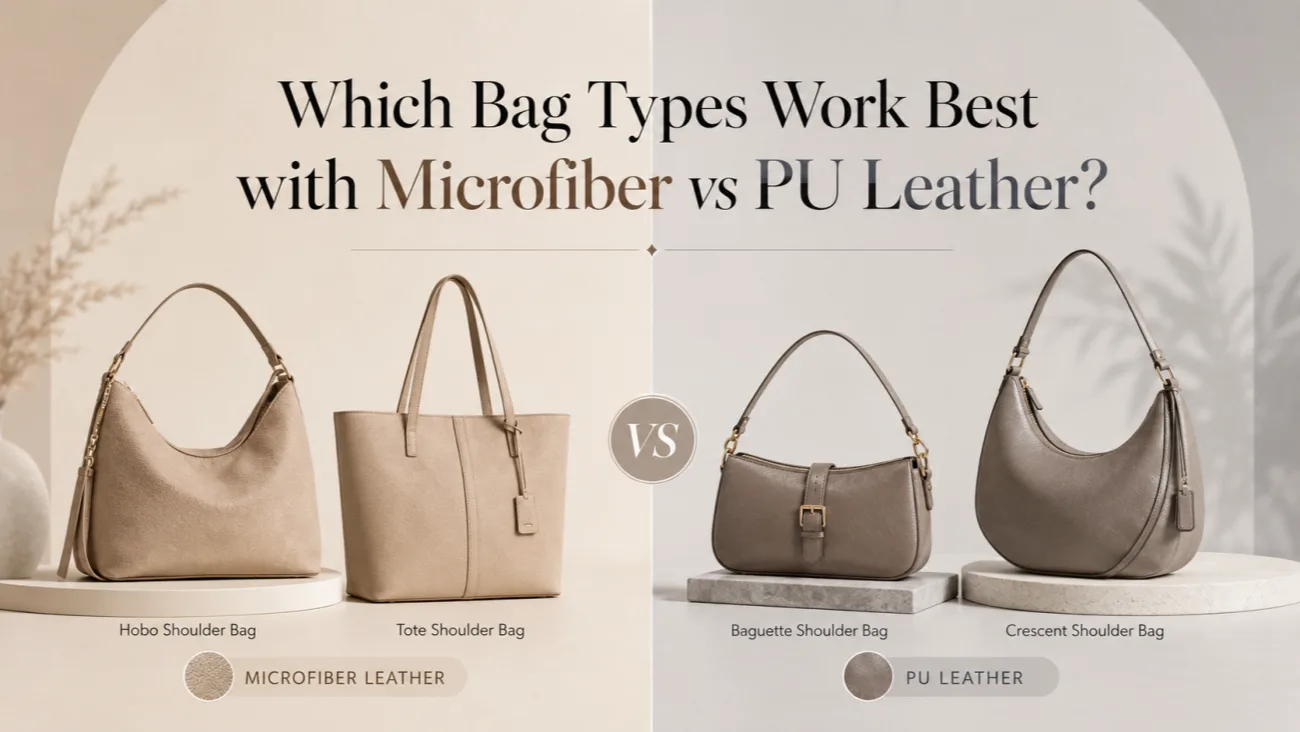
That is what this guide is for. Instead of repeating material science, we focus on one question: given the bag type you want to produce, should you choose microfiber or PU? The answer depends on the bag’s structural needs, how often it will be used, and your target price point.
For a deeper technical breakdown of how these materials compare at the manufacturing level, our PU vs microfiber vs genuine leather comparison covers the full picture.
Table of Contents
- Microfiber vs PU at a Glance: The Decision Shortcut
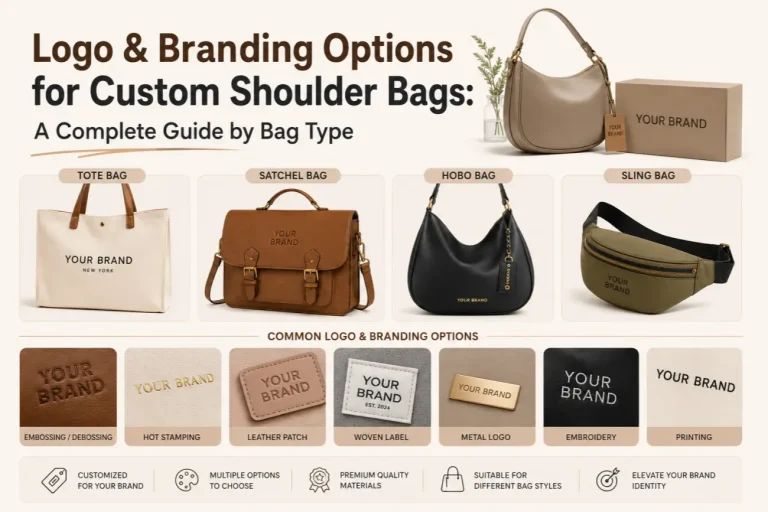
- Shoulder Bags — Tote, Satchel, Hobo & Sling
- Backpacks & Travel Bags
- Crossbody Bags, Clutches & Small Leather Goods
- Quick Decision Table: Bag Type → Recommended Material
- Conclusion — Start Your Bag Project
- References
Microfiber vs PU at a Glance: The Decision Shortcut
If you only remember two things from this guide, remember this:
- Choose microfiber when your bag needs to survive daily use, carry weight, and feel premium — satchels, backpacks, daily totes.
- Choose PU when color range, low MOQ, and cost per unit are your primary drivers — promotional bags, fashion-forward styles, entry-level price points.
Microfiber leather typically costs 1.5–2× more than standard PU but delivers 3–5× better abrasion resistance and much lower return rates on structural defects. PU, on the other hand, supports MOQ as low as 200 pieces and can be produced in nearly any Pantone color, making it the default choice for fast-moving fashion lines.
The rest of this guide maps these trade-offs to specific bag types.
Shoulder Bags — Tote, Satchel, Hobo & Sling
Shoulder bags are the most common category for both microfiber and PU. The right choice depends on the specific silhouette and how the bag is used.
| Bag Type | Best Choice | Why | When to Choose the Other |
|---|---|---|---|
| Tote | PU for entry / Microfiber for daily | PU keeps cost low for open-top totes aimed at fast fashion. Microfiber is better for totes that will carry weight daily — handle anchor points need the extra tear strength. | Choose PU only if your retail price is under roughly $50. For anything above that, microfiber justifies the price with better longevity. |
| Satchel | Microfiber | Satchels require structure, hardware support, and a crisp silhouette. Microfiber’s tensile strength (~15–20 MPa vs PU’s 8–12) handles flap hardware and baseboard insertion without tearing at stress points. | Choose PU only for very budget-conscious lines where satchel shape is soft/unstructured. |
| Hobo | Microfiber | Hobos rely on material drape for their crescent shape. Microfiber is naturally softer and more flexible — it follows the curve without fighting it. PU at the same thickness tends to feel stiff or “plastic” on a hobo silhouette. | PU can work for small hobos (under 10″ width) where drape is less critical. |
| Sling | PU for cost / Microfiber for premium | Sling bags are compact and hardware-intensive. PU keeps the unit cost low for promotional slings. Microfiber is better for daily-carry slings where zipper corners and strap anchors face repeated stress. | Consider the zipper cycle count: if your sling opens/closes multiple times daily, microfiber will outlast PU at the corner turns. |
Each of these shoulder bag types has its own material, logo, and QC guide within our complete shoulder bag content series.
Backpacks & Travel Bags
Backpacks and travel bags carry the heaviest loads and face the most abrasion of any bag category. Material choice here has a direct impact on return rates.
| Bag Type | Best Choice | Why |
|---|---|---|
| Daily Backpack | Microfiber | Shoulder strap anchor points and bottom panel take the most abuse. Microfiber’s tear strength (3–5× higher than standard PU) prevents strap detachment — the #1 backpack return reason. |
| Travel Duffel | Microfiber | Travel bags are thrown into overhead bins and car trunks. Microfiber resists scuffing and surface abrasion far better than PU. |
| Kids / School Backpack | PU | These are replaced every 1–2 years. PU is cost-effective, comes in vibrant colors, and MOQ is lower — ideal for seasonal school collections. |
| Laptop Backpack | Microfiber | Tech accessories demand a premium look and feel. Microfiber’s denser structure also provides better padding stability for laptop compartments. |
For a deeper dive into backpack-specific material selection, our best PU leather for backpacks guide covers PU vs microfiber vs PVC in detail.
Crossbody Bags, Clutches & Small Leather Goods
Smaller bag categories depend more on how frequently the item is used than on structural requirements.
| Bag Type | Best Choice | Why |
|---|---|---|
| Daily Crossbody | Microfiber | Worn against the body, opened and closed frequently. Microfiber resists body oils, sweat, and daily flexing better than PU. |
| Evening Clutch | PU | Used occasionally, carried lightly. PU offers the widest range of fashion colors and finishes (metallic, patent, glitter) at the lowest cost. |
| Wallet / Card Holder | Microfiber (thin variant) | Thin microfiber (0.6–0.8 mm) is available and flex-resistant. Standard PU at the same thickness cracks at fold lines within months. |
| Cosmetic Pouch | PU | Low wear, easy to clean, and color-matching is simple. PU is the most practical choice here. |
| Belt Bag / Fanny Pack | Microfiber | Worn against the body, exposed to sweat and movement. Microfiber holds its shape and resists edge wear better at the curved seams. |
Quick Decision Table: Bag Type → Recommended Material
Use this table as a one-page reference when planning your next collection.
| Bag Category | Specific Type | Recommended Default | Best For |
|---|---|---|---|
| Shoulder Bags | Tote | PU (entry) / Microfiber (daily) | Budget lines → PU; Premium/daily-use → Microfiber |
| Satchel | Microfiber | Structure + hardware support needed | |
| Hobo | Microfiber | Drape and flexibility required | |
| Sling | PU (entry) / Microfiber (premium) | Promo → PU; Daily-carry → Microfiber | |
| Backpacks | Daily Backpack | Microfiber | Strap anchor strength |
| Travel Duffel | Microfiber | Abrasion + scuff resistance | |
| Kids/School | PU | Cost + color variety | |
| Laptop Backpack | Microfiber | Premium feel + padding stability | |
| Small Goods | Daily Crossbody | Microfiber | Body oil + flex resistance |
| Evening Clutch | PU | Fashion colors + low cost | |
| Wallet | Microfiber (thin) | Fold-line crack resistance | |
| Cosmetic Pouch | PU | Easy clean + color match | |
| Belt Bag | Microfiber | Shape retention + edge wear |
Conclusion — Start Your Bag Project
There is no universally “better” material between microfiber and PU — only the material that better fits your bag type, usage frequency, and price target. Follow these three steps to make your decision:
Step 1: Confirm your bag type and how it will be used (daily, occasional, heavy load, light carry).
Step 2: Check the quick decision table above for material recommendation.
Step 3: Request material swatches — always verify hand feel and color accuracy before committing to sampling.
For a complete overview of custom bag manufacturing from start to finish, our custom handbag manufacturer guide covers the full sourcing process including sampling, logo methods, QC, and shipping.
Ready to start? Contact us with your bag type and target quantity, and we will send you material recommendations tailored to your project.
References
- ASTM D4966 — Abrasion Resistance of Textile Fabrics (Martindale Method) — Standard test method used to evaluate abrasion resistance of microfiber and PU leather for bag applications.
- ISO 9001:2015 — Quality Management Systems — International quality management framework used by professional bag manufacturers for material inspection and process control.
- Intertek — Hardline Testing Services — Third-party testing standards for strap anchor strength, seam integrity, and hardware security on bag products.
- Textile Exchange — Preferred Fiber & Materials Market Report — Industry market data on synthetic leather adoption trends including microfiber and PU in bag manufacturing.
- Martindale Abrasion Test Reference — Technical reference for abrasion cycle testing standards used to compare microfiber vs PU leather durability in bag production.