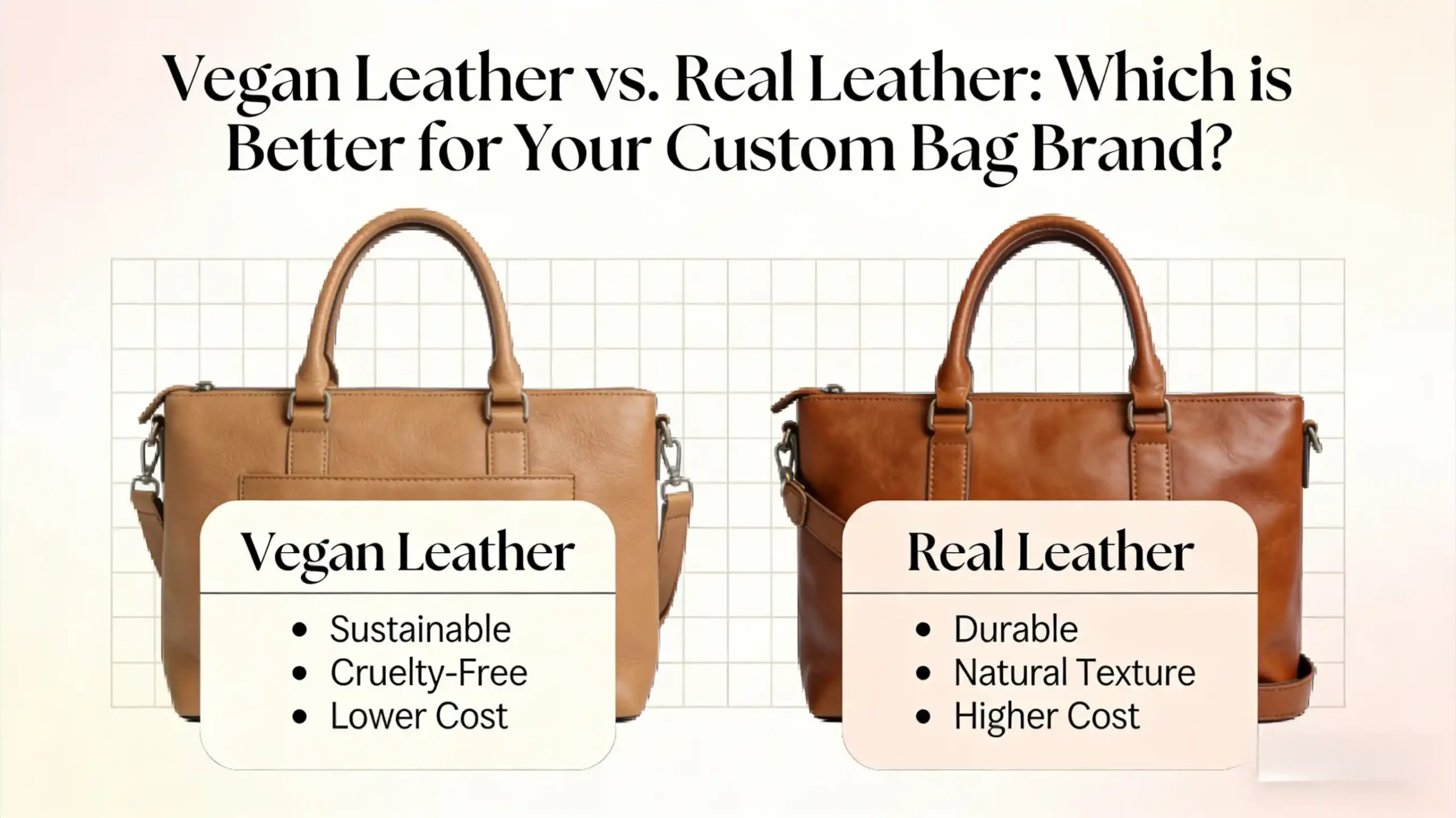
⏱️ Estimated Reading Time: 9 minutes
In this comprehensive guide, we strip away the marketing buzzwords and dive into the technical realities of both materials. We will compare them across four critical dimensions—durability, sustainability, cost, and manufacturing versatility—to help you make the informed choice for your next custom bag collection.
Table of Contents
- 1. Defining the Contenders: What Are We Actually Comparing?
- 2. Durability & Longevity: The Test of Time
- 3. Sustainability: The Environmental Footprint
- 4. Cost Analysis: Margins and Market Positioning
- 5. Manufacturing Versatility: Consistency vs. Character
- 6. Consumer Perception: Who Are You Selling To?
- 7. The Verdict: Which Material Fits Your Brand?
- References
1. Defining the Contenders: What Are We Actually Comparing?
Before we battle them out, let’s clarify what we mean by “Real” and “Vegan” leather, as both categories vary wildly in quality.
Real Leather (Animal Hide)
Real leather is a natural material created by tanning animal rawhide, primarily cattle.
- Full-Grain Leather: The highest quality, using the entire grain layer. It retains natural markings and develops a patina over time.
- Top-Grain Leather: The top layer is sanded to remove imperfections. It is thinner and more pliable but less durable than full-grain.
- Genuine Leather: Often a marketing misnomer for lower-quality split leather layers glued together.
Vegan Leather (Synthetic & Plant-Based)
Vegan leather simulates the look and feel of leather without using animal products.
- PU (Polyurethane) & PVC: The most common synthetic leathers. Modern high-grade PU is soft, breathable, and far superior to the stiff “pleather” of the 90s.
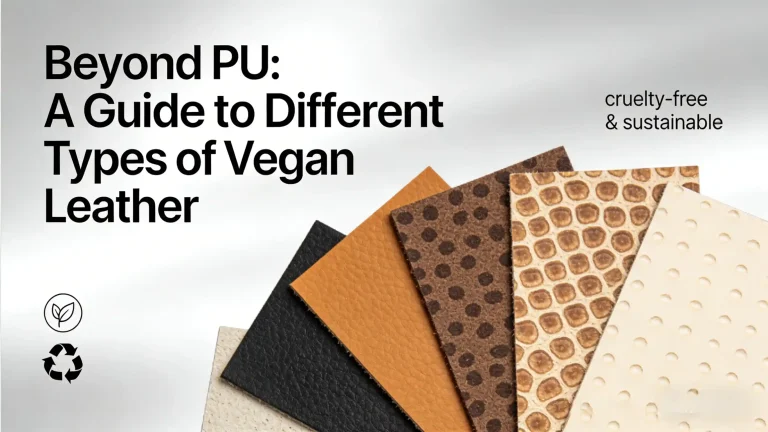
- Bio-Based Leathers: The new frontier. Materials made from agricultural byproducts like pineapple leaves (Piñatex), apple peels, cactus, and mushrooms. These often use a percentage of PU for binding but significantly reduce plastic content.
2. Durability & Longevity: The Test of Time
When customers buy a premium bag, they expect it to last. Here is how the materials stack up.
Real Leather:
Real leather is legendary for its durability. Its dense fiber structure allows it to withstand heavy wear and tear. Instead of wearing out, high-quality leather wears in, developing a unique sheen called a patina. A well-made real leather duffle bag can last for decades, often becoming a family heirloom.
Vegan Leather:
Advancements in microfiber technology have made high-end vegan leather incredibly tough. It is water-resistant (unlike real leather, which can stain), scratch-resistant, and easy to clean. However, it does not develop a patina. Over a long period (5-10 years), synthetic bonds can break down, leading to cracking or peeling, though bio-based options are constantly improving their longevity.
3. Sustainability: The Environmental Footprint
This is the most controversial battleground in the vegan leather vs. real leather debate.
The Case Against Real Leather
Raising livestock requires immense amounts of land, water, and feed. Furthermore, the tanning process—specifically chrome tanning, used in 85% of global leather—can release toxic chemicals like chromium into water systems if not managed by certified facilities (like those audited by the Leather Working Group).
The Case Against Synthetic Leather
Standard PU and PVC are petroleum-based plastics. They are energy-intensive to produce and do not biodegrade, contributing to microplastic pollution.
The Middle Ground: Sustainable Innovation
If sustainability is your brand’s core value, the answer isn’t black and white.
- Vegetable-Tanned Leather: Uses natural tannins (bark, leaves) instead of chemicals, offering a biodegradable real leather option.
- Bio-Based Vegan Leather: Materials like AppleSkin™ or Mirum® offer the best of both worlds—cruelty-free and low carbon footprint. At Lila Lila Bags, we specialize in sourcing these eco-friendly materials for forward-thinking brands.
4. Cost Analysis: Margins and Market Positioning
For a B2B buyer, the Cost of Goods Sold (COGS) is paramount.
Real Leather:
Expensive. You pay for the raw material, but also for the “yield loss.” Hides are irregular shapes with natural flaws (scars, bug bites). A manufacturer might only be able to use 60-70% of a hide, but you pay for the whole thing. This drives up the unit price significantly.
Vegan Leather:
Cost-effective. Vegan leather comes in continuous rolls with a consistent width. This allows for precise cutting layouts with minimal waste (often utilizing 90%+ of the material). For brands scaling up production, vegan leather offers a stable, predictable cost structure that protects your margins.
5. Manufacturing Versatility: Consistency vs. Character
How does the material behave on the production line?
Manufacturer’s Insight: When we produce custom tote bags in bulk, consistency is key. Real leather varies from batch to batch in color absorption and grain texture. Vegan leather, conversely, offers perfect uniformity.
Vegan leather allows for unlimited creativity. It can be embossed with exotic textures (crocodile, snake), printed with digital patterns, or dyed in neon colors that natural leather cannot hold. If your brand relies on trendy, seasonal designs with complex prints, vegan leather provides the versatility you need.
6. Consumer Perception: Who Are You Selling To?
Understanding your audience is as important as understanding the material.
- The Traditionalist: Values heritage, craftsmanship, and longevity. They equate the smell and feel of real leather with luxury. (Target: Men’s briefcases, high-end travel gear).
- The Conscious Gen Z/Millennial: Values ethics, animal welfare, and innovation. They view real leather as outdated or cruel and are willing to pay a premium for high-tech, sustainable vegan alternatives. (Target: Fashion backpacks, trendy handbags).
7. The Verdict: Which Material Fits Your Brand?
There is no single winner in vegan leather vs. real leather—only the right choice for your specific brand goals.
| Feature | Real Leather | Vegan Leather (High-Grade) |
|---|---|---|
| Durability | Excellent (10-20+ years) | Good (3-10 years) |
| Maintenance | Requires conditioning | Low maintenance, easy clean |
| Cost | High ($$$) | Low to Medium ($ – $$) |
| Sustainability | Biodegradable but high impact | Cruelty-free, lower carbon |
| Best For | Luxury heritage brands | Fashion-forward, ethical brands |
If you are positioning yourself as a luxury heritage brand where price is no object, responsibly sourced real leather remains a strong contender. However, if you aim to capture the growing market of ethical consumers, or if you need a scalable, consistent material for bold designs, high-quality vegan leather is the future.
Still unsure? At Lila Lila Bags, we offer material swatches of both premium leathers and cutting-edge vegan alternatives. Contact our sourcing team today to feel the difference yourself and start building your custom collection.
References
- Leather Working Group. (n.d.). Environmental Auditing and Certification. Retrieved from https://www.leatherworkinggroup.com
- Sustainable Apparel Coalition. (n.d.). The Higg Materials Sustainability Index (MSI). Retrieved from https://apparelcoalition.org
- Grand View Research. (2022). Synthetic Leather Market Size, Share & Trends Analysis Report. Retrieved from https://www.grandviewresearch.com