Estimated Reading Time: 11 minutes
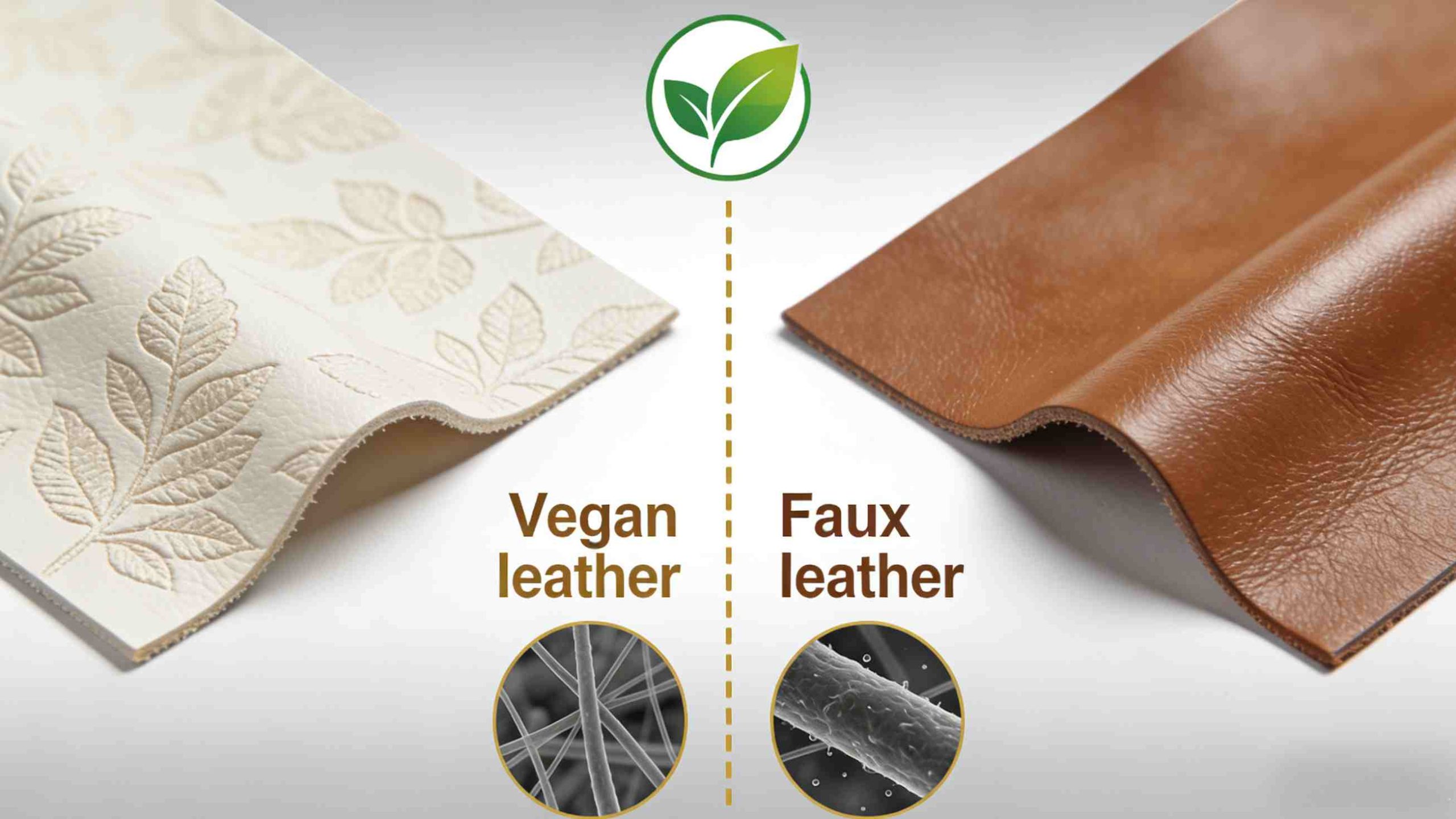
Vegan Leather vs Faux Leather: A Practical Guide for Luxury Brands and Buyers
In the high-stakes world of fashion manufacturing, terminology is everything. You’ve seen the price tags: a “Faux Leather” tote selling for $39 at a fast-fashion outlet, sitting next to a “Vegan Leather” crossbody selling for $250 at a boutique. Visually, they might look identical. But as a brand owner or buyer, you know the difference lies in the details—and the story.
The debate of Vegan Leather vs Faux Leather isn’t just about semantics; it’s about perceived value, manufacturing costs, and market positioning. For B2B buyers, understanding this distinction is the key to unlocking higher profit margins. How do you take a material that costs a fraction of real leather and sell it at a premium price point? The answer lies in specific manufacturing techniques and strategic sourcing.
Table of Contents
1. The Great Debate: Is There Actually a Difference?
Let’s rip the band-aid off: Chemically, Vegan Leather and Faux Leather are often the exact same thing. Both are typically made from polyurethane (PU) or polyvinyl chloride (PVC). However, the market perception is vastly different.
- Faux Leather (“Fake”): This term carries baggage. It reminds consumers of the peeling, plastic-smelling pleather jackets of the 90s. It implies “cheap substitute.”
- Vegan Leather (“Ethical”): This term is a lifestyle statement. It implies cruelty-free, modern, and eco-conscious. It shifts the conversation from “what it isn’t” (not real leather) to “what it is” (animal-friendly).
For a brand, the choice of words dictates your price ceiling. But beyond the name, the quality of the PU used varies wildly. “Faux leather” often refers to standard PVC (rigid, not breathable), while premium “Vegan Leather” usually refers to high-grade PU, Water-borne PU, or Bio-based leather (like apple or pineapple leather).
[Image suggestion: A split comparison photo. Left side: A cracked, shiny PVC surface labeled ‘Standard Faux Leather’. Right side: A rich, pebbled texture matte surface labeled ‘Premium Vegan Leather’.]
2. The Cost Reality: PU vs. Real Leather Breakdown
One of the biggest pain points for brands is balancing quality with cost. Why choose PU? The margins speak for themselves. Here is a realistic look at the raw material cost differences (based on 2024-2025 factory averages).
| Material Type | Approx. Cost (per yard/sq ft) | Waste Factor | Final Cost Efficiency |
|---|---|---|---|
| Real Leather (Top Grain) | $3.50 – $6.00 / sq ft | High (30-40% loss due to natural scars/shape) | Low |
| Standard PU (Faux Leather) | $2.00 – $4.00 / yard | Low (Uniform rolls) | Very High |
| Premium Microfiber / Water-borne PU | $8.00 – $15.00 / yard | Low | High |
The Math of Profit: A standard medium-sized tote bag might require 8-10 square feet of real leather, costing roughly $40-$50 just in material. The same bag in high-end Microfiber PU might cost $10-$15 in material.
This $30+ saving per unit is massive. However, if you simply pocket that saving and sell a cheap-looking bag, you lose the customer. The secret is reinvesting that saving into hardware and craftsmanship to justify a high retail price.
3. How to Sell PU Bags at a Premium Price (The $200+ Strategy)
How do brands like Telfar or Stella McCartney sell non-leather bags for hundreds of dollars? They don’t sell “plastic”; they sell innovation and ethics. Here is the blueprint for turning low-cost PU into a high-ticket item.
1. The “Eco-Tech” Narrative
Don’t hide the material; celebrate it. Use terms like “Solvent-Free,” “Water-borne PU,” or “Recycled Matrix.” If you are sourcing from our factory, ask about our GRS-certified recycled PU options. This allows you to market the bag not just as “not leather,” but as “better than leather” for the planet.
2. Texture Engineering
Cheap PU looks flat and plasticky. Expensive PU mimics the “break” and grain of real hide. We can use embossing plates to replicate the texture of Togo leather, Saffiano, or even exotic Croc skin. The tactile experience is 90% of the perceived luxury. If it feels soft and warm to the touch (not cold and sticky), customers will pay more.
3. Weight Matters
Real leather is heavy. Cheap PU is light. To bridge this gap, we often use thicker backing fabrics (like suede-feel microfiber) inside the PU. This gives the bag structure and “heft,” making it feel substantial and expensive when the customer picks it up.
[Image suggestion: A macro shot of a high-quality gold-plated zipper pull and heavy chain strap against a black pebbled vegan leather texture.]
4. Manufacturing Secrets: Elevating Perceived Value
As a manufacturer, we see thousands of designs. The brands that succeed in the premium vegan leather space focus on these three manufacturing details:
The Edge Paint (Oil Edge)
On a real leather bag, the raw edges are often painted. On cheap PU bags, edges are often folded over to hide the raw edge. To make PU look expensive, we treat it like leather. We apply multiple layers of high-quality, matte edge paint. This creates a clean, architectural look that screams “designer quality.”
Hardware Investment
Remember the material cost savings we calculated earlier? Put that money here. Cheap, hollow zinc alloy hardware feels like a toy. Switch to solid brass or high-polished steel with vacuum plating (PVD). When a customer hears the solid “clack” of a magnetic buckle or feels the smoothness of a YKK Excella zipper, they forget the bag is made of PU.
(Check out our guide on How Quality Hardware Makes Your Bags Look Expensive).
Internal Construction
Cheap bags collapse when empty. Luxury bags hold their shape. We use specific reinforcement materials (EVA foam, boning, or stiffeners) between the PU and the lining. A structured vegan leather bag that stands up on its own looks premium on a shelf—and in your customer’s unboxing video.
5. Sourcing Checklist for Premium Brands
Ready to produce your next collection? Don’t just ask for “PU.” Use this checklist when communicating with your custom handbag manufacturer:
- Hydrolysis Resistance: Ask for PU with at least 3-5 years hydrolysis resistance. This ensures the bag won’t peel in humid climates (a common complaint with cheap faux leather).
- Backing Fabric: Request a “microfiber backing” or “imitation suede backing” for a luxurious hand-feel.
- Smell Test: Explicitly state “No strong chemical odor.” We use airing processes to ensure the bags arrive smelling neutral, not like a chemical factory.
- Eco-Certifications: Ask for GRS (Global Recycled Standard) or REACH compliance certificates to support your marketing claims.
Conclusion
The battle of Vegan Leather vs Faux Leather is won in the details. By choosing the right grade of material, investing in heavy hardware, and using leather-grade construction techniques, you can bypass the “cheap” stigma entirely. You aren’t just selling a bag; you’re selling a guilt-free, high-performance luxury experience.
Ready to elevate your brand with premium vegan leather manufacturing? Contact our expert team today to see material swatches that will change your mind about what PU can do.
Start Your Premium Vegan Leather Line
Get a free quote and material sample kit.