Why Product-Line Design Is a Niche Brand Superpower
Many niche bag brands try to differentiate by making a single “hero” silhouette. That can work—until the hero sells out,
a copycat appears, or your audience’s needs shift (work commute, travel, parenting, events). Product-line design is how you
turn a one-hit bag into a brand people can recognize, buy repeatedly, and recommend confidently.
In practice, bag product line design is not “more products.” It is a system: a shared design language, a clear price ladder,
and deliberate coverage of use cases. The system helps customers self-select quickly (“That’s the everyday tote line, and this is the
lighter weekend line”) while giving you operational leverage: shared components, repeatable construction, and reusable patterns.
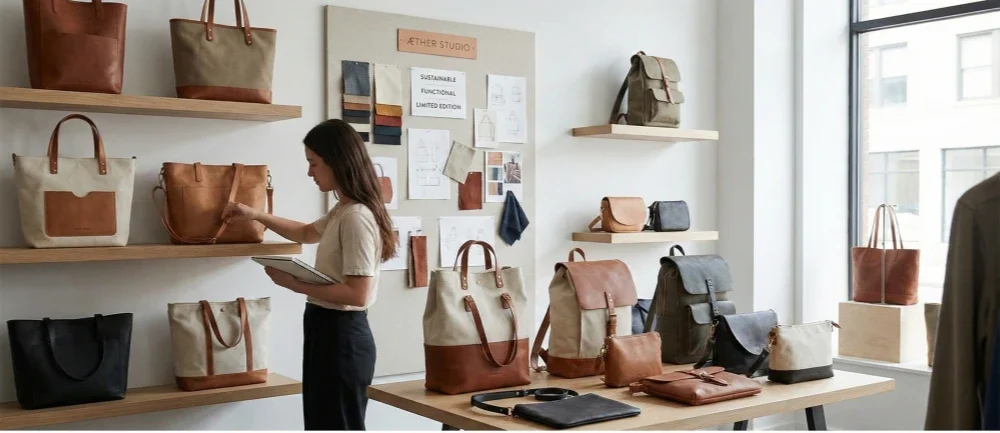
If you want a concrete benchmark, browse a cohesive assortment on a single site and notice what repeats—strap hardware, corner
shapes, lining color, logo placement, pocket geometry. A well-built collection page should look like a family, not a flea market.
For inspiration, explore a curated bag assortment and note the recurring cues on
lilalilabags.com.
Start With a Sharp Use-Case Thesis
Differentiation is easier when you decide what you are for. Niche brands win by being painfully specific:
not “bags,” but “hands-free city carry,” “lightweight work organization,” or “travel that looks like everyday.”
Use-case thesis template: “We design bags for [person + scenario] who need [job-to-be-done] without sacrificing [non-negotiable aesthetic/values].”
Example: “We design bags for commuters who need laptop protection and quick-access organization, without bulky shapes or loud branding.”
Once the thesis is written, your product line becomes a map of “jobs”:
the daily carry, the workhorse, the event crossbody, the travel companion. Importantly, you can now say no.
Every “cool” new silhouette must earn its place by supporting the thesis.
Create a Line Architecture That Customers Understand
Great niche brands structure their assortment so a first-time visitor can understand it in under 15 seconds. A practical
approach is to define (1) families, (2) tiers, and (3) roles.
Families are visual systems: a shared silhouette logic and details. For example: a “Soft Structure” family (slouchy,
curved seams, supple handfeel) and a “Clean Geometry” family (sharp edges, minimal seams, crisp panels). On a collections page
like Collections, families should read instantly.
Tiers create a price ladder without confusing the customer. The simplest ladder is “Good / Better / Best,” but
you can express it as “Core / Elevated / Atelier.” Each tier should have a clear reason to exist:
better leather grade, higher-density lining, upgraded zippers, more labor-intensive edge finishing, or modular add-ons.
Roles keep you honest operationally. A niche brand typically needs:
a Core that’s always in stock, a Seasonal that refreshes color/material stories, and a Limited that creates excitement and
tests new ideas without risking the whole line.
Make Materials a Signature, Not a Spec Sheet
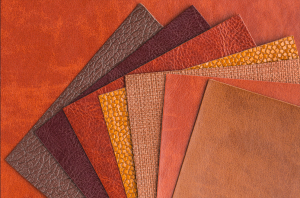
Material choice is one of the fastest paths to differentiation—because it changes touch, sound, patina,
and aging. But the niche brand advantage isn’t simply using “premium materials.” It’s building a material story that feels
coherent and provable.
Consider three layers of material differentiation:
- Handfeel: Does it feel buttery, dry, waxy, pebbled, crisp, or plush?
- Behavior: Does it slouch or stand? Does it scratch, patina, or wipe clean?
- Meaning: What does the material signal—heritage craft, modern minimalism, durability, or sustainability?
If you use leather, third-party frameworks can help you support environmental claims and supplier selection. Leather Working Group
describes its audit standard as part of driving responsible leather manufacturing and traceability initiatives
[1]. If you use recycled textiles (linings, webbing, canvas), Textile Exchange’s Global Recycled Standard (GRS)
sets criteria for third-party certification and chain of custody, plus additional social and environmental requirements
[2]. Even if you aren’t certified today, designing your line with these requirements in mind helps you
avoid future rework.
The practical move for niche brands: pick one “hero” material per family, then build controlled variations (a seasonal color,
a limited texture, a special lining) instead of changing everything each drop. This keeps your collection recognizable while
still feeling new.
Build a Recognizable Design Language (Outside + Inside)
Customers remember patterns, not isolated features. The most distinctive bag lines repeat a small set of cues across sizes and
categories. Think of design language in two layers:
Outside language is what people see at a distance: silhouette proportions, strap geometry, seam placement,
edge finish, hardware shape, and the “negative space” around the logo. Niche brands often win by choosing restraint:
fewer panels, fewer logo hits, one signature closure, one hardware family.
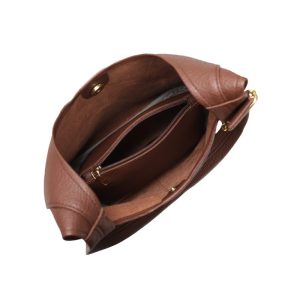
Inside language is what converts a first purchase into a second. Interior layout is your brand’s “UX.”
If your line is built for daily carry, make quick-access pockets consistent across styles. If it’s built for work,
keep the laptop sleeve geometry stable across the tote and backpack. When customers learn your interior once, they can buy again
without anxiety.
A helpful exercise: define five “line rules,” then apply them to every SKU:
- One signature hardware shape (same curve radius, same finish family).
- Two seam types max (e.g., topstitch + edge paint).
- One pocket geometry system (same angle or same radius corners).
- One strap attachment principle (rings, hidden tabs, or direct stitch).
- One lining color per family (with limited seasonal exceptions).
This is also where brand pages matter. A concise “why we design this way” story builds recognition and lets you explain decisions
without sounding defensive. If you maintain a brand story page, keep it linked from navigation—something like
About Us.
Win on Fit, Comfort, and Durability Testing
The most durable differentiation is often invisible in product photos. Strap drop, handle bite, zipper path, corner abrasion, and
weight distribution determine whether your bag becomes someone’s daily companion or a regret purchase. Niche brands can outcompete
larger brands here because you can be closer to the user and iterate faster.
Build a lightweight testing protocol before you expand the line:
- Carry tests: load the bag with real objects (laptop, water bottle, keys) and do 30-minute walks.
- Access tests: time how fast you can retrieve phone/keys with one hand.
- Abrasion tests: observe corners and strap edges after repeated wear points (desk edge, coat friction).
- Hardware tests: stress the attachment points; check squeak, twist, and finish wear.
Then encode what you learn into the line rules. For example: “All crossbodies must fit a phone in the outer pocket” or
“All totes must carry a 13-inch laptop without distorting the base.” When these rules are consistent, customers trust your next launch.
Turn Sustainability and Compliance Into Trust
“Sustainable” claims are no longer a vibe; they need structure. The goal isn’t to chase every badge, but to build a credibility stack:
standards you can point to, and a supply chain story that is consistent with your product line choices.
Three trust builders that pair well with bag product lines:
- Responsible material frameworks: For leather sourcing, Leather Working Group provides a certification approach and
encourages responsible sourcing practices [1]. - Recycled content traceability: GRS establishes chain-of-custody verification and includes processing and chemical-related
requirements [2]. - Company-level accountability: B Corp Certification is positioned as a verification of performance, accountability, and
transparency across areas like supply chain and input materials [3].
Also consider regulatory expectations in the markets you sell into. In the EU, the REACH framework includes a “consumer right to know”
about substances of very high concern in articles and obliges companies to respond within 45 days to an inquiry
[4]. Even if you aren’t EU-based, designing your material and hardware choices with compliance in mind reduces
future headaches and returns.
A simple, high-impact practice: publish a “Materials & Care” section that matches your line architecture. If a family uses the same
lining and hardware, state it once at the family level, and then call out differences per style. This makes your collection feel intentional
and helps customers choose confidently.
Launch Rhythm: Core, Seasonal, and Limited Drops
Product-line design becomes differentiation when your launch rhythm reinforces your identity. Here’s a proven cadence for niche brands:
- Core: 3–6 best sellers, always in stock, always photographed consistently.
- Seasonal: 1–2 color/material stories that refresh the same families (not random new silhouettes).
- Limited: micro-drops for experiments: a new closure, a new textile, or a collaboration strap pack.
This cadence also helps wholesale and retail partners understand you. They can reorder Core, try Seasonal, and use Limited for social buzz.
If you’re selling direct-to-consumer, it helps your email and content calendar: Core education, Seasonal styling, Limited urgency.
Finally, make it easy for customers to ask questions and get support—especially when you are scaling your line. A clear support path like
Contact reduces purchase friction and improves repeat rate.
A Practical 90-Day Plan for Your Next Bag Line Refresh
If you’re starting from scratch (or cleaning up a chaotic assortment), this 90-day sequence keeps you focused:
- Days 1–10: Define the thesis. Write the use-case thesis, list top 3 use cases, and define the customer’s “non-negotiables.”
- Days 11–25: Draft line architecture. Choose 2 families max. Define tiers, roles (Core/Seasonal/Limited), and target price ladder.
- Days 26–40: Create the design language. Decide on hardware family, seam rules, lining palette, and pocket geometry standards.
- Days 41–55: Build prototypes + test. Run carry, access, and abrasion tests. Capture failures as rules.
- Days 56–70: Material and proof plan. Choose hero materials and identify which claims you can substantiate (LWG/GRS/B Corp paths).
- Days 71–85: Merchandising + photography plan. Photograph by family, show interior consistency, and publish a clear collection story.
- Days 86–90: Launch rhythm. Commit to Core replenishment, schedule Seasonal drops, and define Limited experiments.
The key is discipline: fewer families, tighter rules, better testing. Customers can feel coherence instantly, and coherence is what turns
a niche bag brand into a recognizable name.
Conclusion
Niche brands don’t beat big brands by outspending them. They win by out-designing them—using systems that turn a collection into a
recognizable signature. When bag product line design is built around a sharp use-case thesis, a clear architecture, a repeatable design
language, and provable material choices, differentiation stops being a marketing claim and becomes a customer experience.
Start small: one thesis, two families, one hardware system, one interior logic. Then iterate through testing and disciplined seasonal
refreshes. Over time, your product line becomes your moat—hard to copy, easy to recognize, and even easier to repurchase.
References
- Leather Working Group. Responsible leather — Leather Working Group.
- Textile Exchange. Recycled Claim Standard (RCS) + Global Recycled Standard (GRS).
- B Lab. About B Corp Certification.
- European Commission. REACH Regulation.
If you’re sourcing custom bags in bulk, working directly with a manufacturer can reduce cost and improve quality.
Message Us on WhatsApp for Fast Factory Support