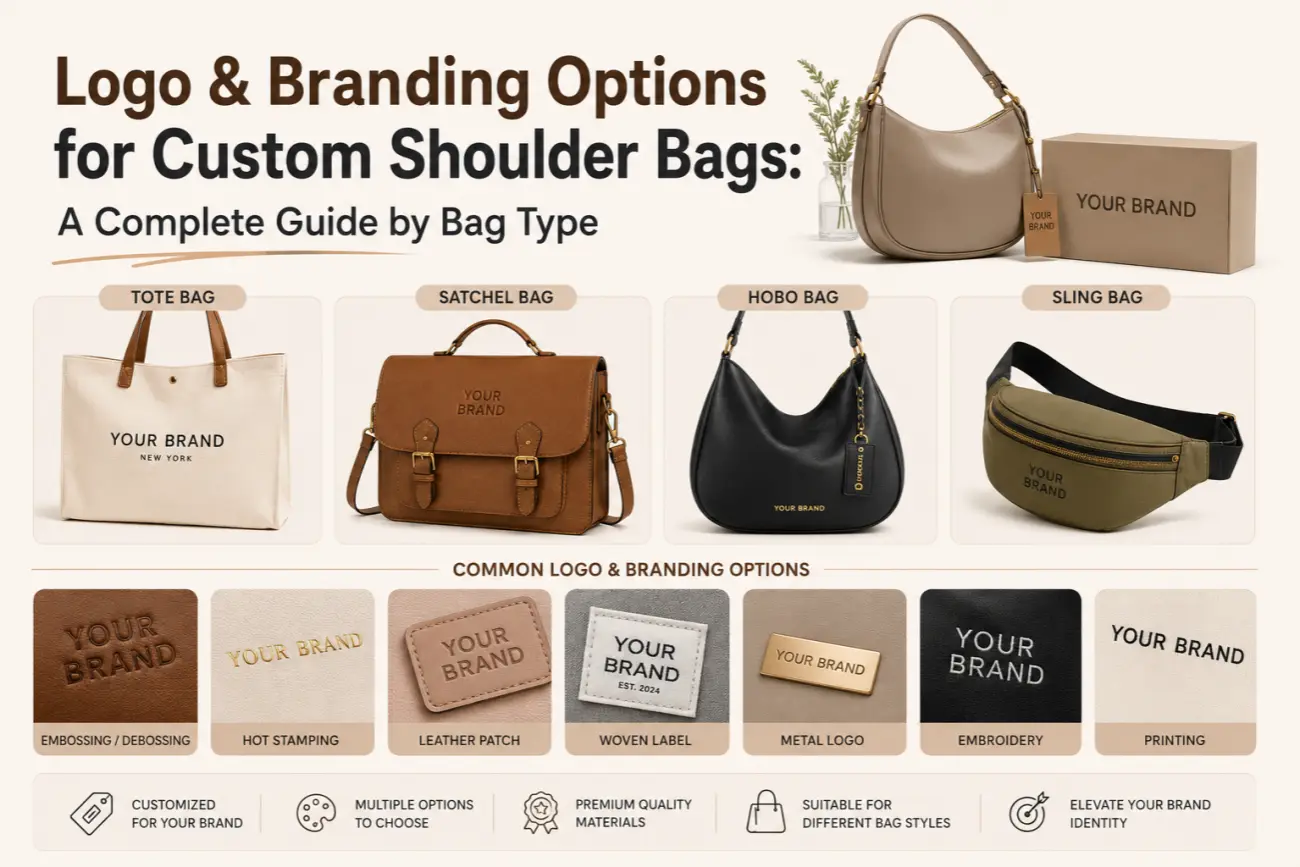
Cover Image: shoulder-bag-logo-options.jpg — Alt: Seven logo and branding method samples on custom shoulder bags — embossing, metal plate, screen print, foil stamp, woven label, silicone patch, and heat transfer | Description: A comparison display of seven logo application methods used in OEM shoulder bag manufacturing. Each sample shows the visual effect on different bag materials, helping wholesale buyers choose the right branding technique before sampling.
OG Image: shoulder-bag-logo-options-og.jpg
Estimated reading time: 8 minutes
Your logo is the most visible brand element on a custom shoulder bag. It is what customers see first, what they remember, and often what justifies the price they pay. But choosing the right logo method is not just about how it looks on a screen — it is about how it performs on the actual material, at scale, within your budget.
This guide covers seven common logo and branding methods for custom shoulder bags: embossing, metal nameplates, screen printing, foil stamping, woven labels, silicone patches, and heat transfer. For each method, we explain the visual effect, compatible materials, cost range, and which shoulder bag types it suits best.
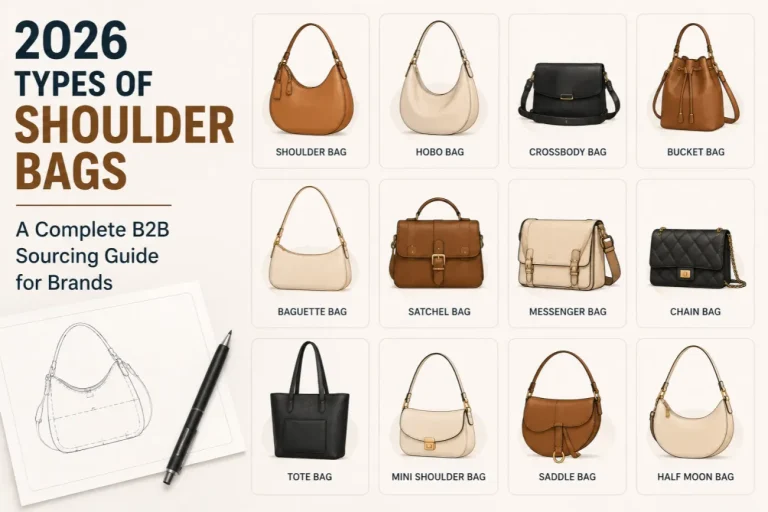
If you are still deciding on a base silhouette, start with our complete types of shoulder bags guide — your bag type determines which logo methods are even feasible.
Table of Contents
- Why Your Logo Method Should Match Your Shoulder Bag Strategy
- 7 Common Logo & Branding Methods for Custom Shoulder Bags
- Logo Method Compatibility by Bag Material
- Recommended Logo Methods by Shoulder Bag Type
- How Logo Choice Affects Cost, MOQ & Lead Time
- Common Logo & Branding Mistakes to Avoid
- Conclusion — Start Your Custom Shoulder Bag Project
- References
Why Your Logo Method Should Match Your Shoulder Bag Strategy
Choosing a logo method based on aesthetics alone is one of the most common sourcing mistakes we see. A logo that looks great on a flat material swatch can fail completely once applied to the actual bag — and by then, you have already committed to sampling costs.
Three factors determine whether a logo method will work for your project:
- Bag type — A structured satchel can support a heavy metal nameplate; a lightweight sling cannot.
- Material — Deep embossing cracks thin PU leather; screen printing blurs on coarse canvas.
- Logo design — Fine text and small logos require different methods than bold shapes.
In our experience, the right sequence is: choose your bag type first, then your material, then your logo method. Our custom shoulder bag materials guide covers the material half of this decision. This article completes the picture with logo and branding options.
7 Common Logo & Branding Methods for Custom Shoulder Bags
Each logo method produces a different visual and tactile result, and each is compatible with a specific range of materials and bag types.
Embossing & Debossing
Embossing raises the logo above the surface; debossing presses it in. Both create a clean, premium look with no added material — just the logo shape formed into the bag surface. This works best on genuine leather, microfiber leather, and thick PU (1.0 mm or thicker). The result ages well: on full-grain leather, an embossed logo deepens over time as the hide develops patina.
Before confirming the sample, make sure your material thickness is sufficient. Thin PU (0.6–0.8 mm) pressed with a deep embossing die can crack at the edges of the logo. If you are using genuine leather, review our leather quality grades guide — full-grain and top-grain take embossing best.
Best for: Satchels, premium shoulder bags.
Cost impact: Low to medium (die cost only, no per-unit material cost).
MOQ: 300+ (die amortization requires minimum quantity).
Metal Nameplate
A metal nameplate is the most visually premium logo option available. It is a separate piece — typically zinc alloy, brass, or stainless steel — attached to the bag by rivets, screws, or stitching. Finishes include gold, silver, antique brass, matte black, and nickel.
Metal nameplates are ideal for satchels and structured shoulder bags where the bag body is firm enough to support the weight of the hardware. They are less suitable for slings and hobo bags where the material drapes or flexes — the rigid plate can cause the surrounding fabric to pucker or pull.
Best for: Satchels, structured totes, premium collections.
Cost impact: Medium to high ($0.50–$1.50 per piece depending on finish).
MOQ: 500+ (metal mold fabrication required).
Screen Printing
Screen printing is the most cost-effective logo method for custom shoulder bags, especially at scale. Ink is pushed through a mesh screen onto the bag surface. The process works well on smooth surfaces — PU leather, nylon, polyester, and canvas with a tight weave.
For wholesale orders, we usually suggest screen printing when the logo is a solid shape or bold text, the bag material has a smooth surface, and the order quantity is 500+ pieces. The per-unit cost drops significantly beyond 1,000 units. However, screen printing cannot reproduce fine details or gradients — a logo with 6 pt text will likely blur.
Best for: Totes, promotional shoulder bags, canvas bags.
Cost impact: Low ($0.10–$0.30 per piece).
MOQ: 200–500.
Foil Stamping
Foil stamping uses heat and pressure to transfer a metallic or colored foil onto the bag material. The result is a reflective, eye-catching logo with a distinct tactile edge. Available in gold, silver, copper, rose gold, holographic, and matte colors.
Foil stamping works well on smooth PU, microfiber leather, and coated canvas. It is a popular choice for fashion-forward shoulder bags and slings where the logo is meant to be a design element in itself. One limitation: foil stamping on curved surfaces or along seam lines can misregister, so keep the stamping area on a flat panel.
Best for: Fashion shoulder bags, slings, DTC brands.
Cost impact: Low to medium ($0.15–$0.50 per piece).
MOQ: 300+ (foil stamping die required).
Woven Label & Patch
A woven label is a separate fabric piece — typically satin or taffeta — with the logo woven directly into the material, then sewn onto the bag. This is one of the most versatile logo methods because it does not depend on the bag’s surface texture. Rough canvas, soft nylon, and curved hobo panels all accept a woven label equally well.
Woven labels can reproduce multiple colors and fine details, making them suitable for complex logos. They are commonly placed on the exterior (center of the bag, seam, or side) or interior as a brand tag. Our tote vs satchel vs hobo vs sling comparison shows how woven labels work across different shoulder bag silhouettes.
Best for: Totes, canvas shoulder bags, hobo bags.
Cost impact: Low to medium ($0.15–$0.40 per piece).
MOQ: 500+ (loom setup per label design).
Silicone Patch
Silicone patches are raised, flexible, 3D logo badges commonly used on sport and outdoor shoulder bags. They are durable, weather-resistant, and retain their shape under flex and compression — ideal for nylon slings and active-use shoulder bags.
The manufacturing process requires a custom silicone mold per logo design, which means a one-time tooling cost of approximately $80–$150. The patches are then glued or stitched onto the bag. Silicone patches can be produced in a single color per layer, so multi-color logos require stacked layers, increasing cost.
Best for: Sling bags, outdoor/travel shoulder bags, sporty styles.
Cost impact: Medium ($0.30–$0.80 per piece including mold amortization).
MOQ: 500+ (mold cost recovery).
Heat Transfer
Heat transfer (also called thermal transfer) prints the logo onto a carrier film, then uses heat and pressure to bond it to the bag material. It is the best option for logos with gradients, photographic elements, or fine details that screen printing cannot reproduce.
Heat transfer works best on smooth synthetic surfaces — PU, nylon, and polyester. It is less durable on high-flex areas; over time, the transfer film may crack at fold points. For the inspection criteria on heat transfer quality, refer to our custom handbag quality control checklist.
Best for: Fashion totes, polyester shoulder bags, promotional lines.
Cost impact: Low ($0.10–$0.35 per piece).
MOQ: 200–500.
Logo Method Compatibility by Bag Material
The table below shows which logo methods work with which bag materials, based on real production results. Use it to match your chosen material to a compatible logo method before requesting a sample.
| Logo Method ↓ / Material → | Full-Grain Leather | PU Leather | Microfiber | Canvas | Nylon | Polyester |
|---|---|---|---|---|---|---|
| Embossing/Debossing | ✅ Best | ⚠️ Thick only | ✅ Good | ❌ No | ❌ No | ❌ No |
| Metal Nameplate | ✅ Best | ✅ Good | ✅ Good | ⚠️ Heavy fabrics | ❌ No | ❌ No |
| Screen Printing | ⚠️ Smooth finish | ✅ Best | ⚠️ Needs prep | ⚠️ Tight weave | ✅ Best | ✅ Best |
| Foil Stamping | ✅ Good | ✅ Best | ✅ Good | ⚠️ Coated only | ✅ Good | ✅ Good |
| Woven Label | ✅ Good | ✅ Good | ✅ Good | ✅ Best | ✅ Good | ✅ Good |
| Silicone Patch | ⚠️ Less common | ✅ Good | ✅ Good | ❌ No | ✅ Best | ✅ Good |
| Heat Transfer | ❌ No | ✅ Best | ✅ Good | ❌ No | ✅ Good | ✅ Best |
Recommended Logo Methods by Shoulder Bag Type
This decision matrix maps each shoulder bag type to its recommended logo methods, with a top pick for each.
| If Your Bag Type Is… | Top Pick | Also Consider | Avoid |
|---|---|---|---|
| Tote | Screen Printing | Woven Label, Metal Plate | Silicone Patch (too sporty) |
| Satchel | Metal Nameplate | Embossing, Woven Label | Heat Transfer (not premium enough) |
| Hobo | Woven Label | Embossing, Foil Stamping (on flat panel) | Metal Plate (too rigid for curve) |
| Sling | Silicone Patch | Foil Stamping, Screen Printing | Heavy Metal Plate (adds weight, distorts fabric) |
For a deeper side-by-side comparison of these four shoulder bag types, see our tote vs satchel vs hobo vs sling guide.
How Logo Choice Affects Cost, MOQ & Lead Time
Many buyers underestimate how much the logo method impacts their total project cost and timeline.
Here is a rough breakdown of what each method adds to your project:
- Screen printing and heat transfer — Lowest cost addition ($0.10–$0.35/pc). These are the best options for cost-sensitive projects. Setup time is minimal — typically 1–3 days for screen creation.
- Woven labels and silicone patches — Medium cost ($0.15–$0.80/pc). They require separate production lead time (2–3 weeks for label weaving, 1–2 weeks for silicone mold). Factor this into your overall timeline.
- Metal nameplates and embossing — Highest cost ($0.50–$1.50/pc for metal; die cost for embossing). Metal plates require mold fabrication (2–3 weeks) and per-piece attachment labor. Embossing dies cost $50–$200 but have no per-unit material cost, making them economical at higher volumes.
From what we see in bulk production, the biggest hidden cost is not the logo method itself — it is rejecting finished bags because the logo quality did not meet expectations. Always request a logo strike-off sample before bulk production. Our complete custom handbag manufacturer guide explains how to structure the sampling process.
Common Logo & Branding Mistakes to Avoid
After producing thousands of custom shoulder bags, these are the most frequent logo-related issues we encounter.
1. Deep embossing on thin PU leather.
A buyer chooses a debossed logo for a satchel, but specifies 0.6 mm PU to keep material costs low. The embossing die presses through nearly the full material thickness, causing micro-cracks around the logo edges that worsen with handling. The fix: for embossing on PU, require 1.0 mm minimum thickness, or switch to a woven label instead.
2. Complex logo design in screen printing.
A logo with 6 pt text, fine lines, and 3 colors is sent for screen printing on a canvas tote. The fine lines blur, the colors misregister by 0.5 mm, and the result looks unprofessional. Screen printing is a bold-medium, not a fine-detail medium. If your logo has small text or gradients, choose heat transfer or a woven label instead.
3. Metal nameplate on a soft material.
Attaching a heavy zinc alloy plate to a thin nylon sling causes the fabric to pucker around the rivets, and the plate flops as the bag moves. For soft or lightweight materials, choose a lighter logo method — silicone patch, foil stamp, or woven label.
4. Sending a low-resolution JPG as the logo file.
Factories need vector files (.ai, .eps, .svg) to create dies, screens, and molds. A 72 DPI JPG will produce a blurry result at any scale. Always provide your logo as a vector file or ask your manufacturer which format they require before sampling.
For a complete framework on what to inspect at each production stage, including logo application, see our custom handbag quality control checklist.
Conclusion — Start Your Custom Shoulder Bag Project
Logo and branding options should never be an afterthought. The method you choose affects how customers perceive your brand, how much each unit costs, and how long production takes. Follow these three steps in order:
Step 1: Confirm your shoulder bag type — review the types of shoulder bags guide.
Step 2: Choose your material — use our shoulder bag materials guide.
Step 3: Select your logo method — use the compatibility table in this article to shortlist options that work with both your material and bag type.
Ready to start your project? Contact us with your bag type, material preference, and logo design, and we will provide a complete quote including logo strike-off samples.
References
- SGIA — Specialty Graphic Imaging Association — Industry standards for screen printing and heat transfer application on various bag materials including adhesion testing guidelines.
- Intertek — Hardline Testing Services — Third-party testing standards for metal nameplate adhesion, embossing depth consistency, and logo durability on bag products.
- ASTM D4966 — Abrasion Resistance of Textile Fabrics (Martindale Method) — Standard test used to evaluate how printed, embossed, and transferred logos withstand wear on bag surfaces.
- Fortune Business Insights — Handbag Market Size Report — Global market data showing shoulder bag segment growth and branding trends in the accessories industry.
- OEKO-TEX Standard 100 — Certification standard for logo inks, transfer films, and metal hardware used in bag production, ensuring compliance with EU and US safety regulations.