Estimated Reading Time: 9 minutes
Table of Contents
- 1. Understanding Synthetic Leathers: The Basics
- 2. What is PU Leather? (Polyurethane)
- 3. What is PVC Leather? (Polyvinyl Chloride)
- 4. What is Microfiber Leather? (The Premium Tier)
- 5. PU vs PVC vs Microfiber: The Ultimate Comparison
- 6. How to Choose the Best PU Leather for Your Backpacks
- 7. Conclusion & Sourcing the Right Manufacturer
1. Understanding Synthetic Leathers: The Basics
Synthetic leather is a man-made fabric designed to look and feel like real animal hide. It is widely used in the fashion industry because it is cruelty-free, highly customizable in terms of color and texture, and generally more cost-effective. However, not all synthetic leathers are created equal. The base fabric (woven or non-woven) and the chemical coating applied to it dictate the material’s lifespan, environmental impact, and suitability for PU leather backpacks.
[Image suggestion: A cross-sectional macro graphic comparing the structural layers of PU, PVC, and Microfiber leather.]
2. What is PU Leather? (Polyurethane)
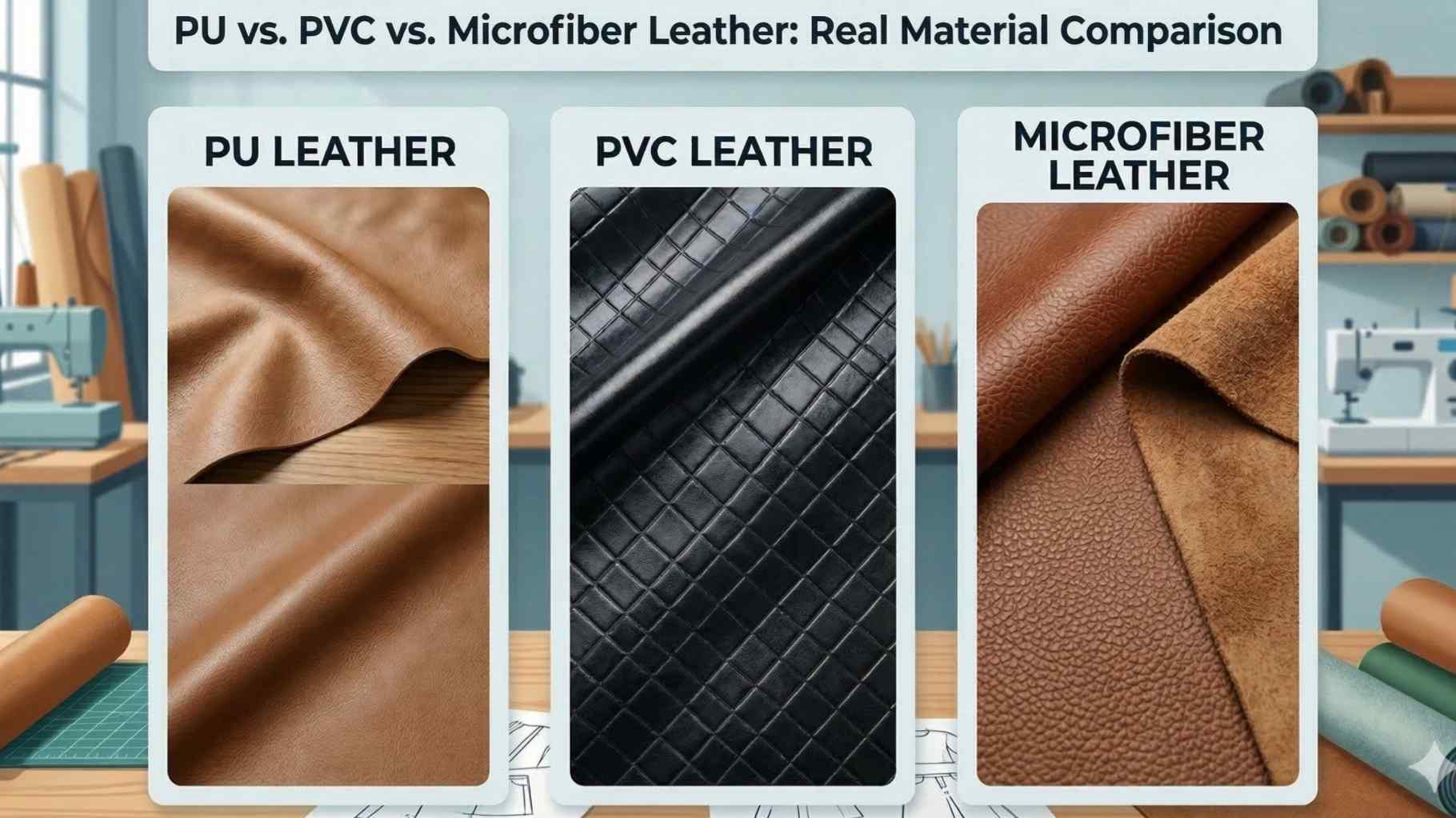
Polyurethane (PU) leather is currently the gold standard for mid-to-high-end synthetic bags. It is manufactured by coating a base fabric—usually cotton, polyester, or shredded leather scraps (in the case of bicast leather)—with a flexible polyurethane polymer.
Pros of PU Leather for Backpacks
- Soft Hand-Feel: PU is highly pliable and mimics the buttery texture of genuine leather better than older synthetics.
- Breathability: Unlike PVC, PU has microscopic pores, making it slightly breathable and less prone to retaining odors.
- Eco-Friendlier: Modern water-based PU (solvent-free PU) significantly reduces harmful chemical emissions during production.
Cons of PU Leather
- Hydrolysis: Low-grade PU is susceptible to hydrolysis—a chemical breakdown caused by moisture and heat—which leads to the infamous “peeling” effect over time.
3. What is PVC Leather? (Polyvinyl Chloride)
PVC was the original “pleather.” It is made by altering vinyl with plasticizers and dye, then applying it to a fabric backing. While it dominated the market in the 1980s and 1990s, it is rapidly falling out of favor in modern fashion manufacturing.
The Downfall of PVC in Modern Fashion
While PVC is incredibly durable, waterproof, and extremely cheap to produce, its drawbacks far outweigh its benefits for fashion backpacks. PVC is rigid, giving it a distinct “plastic” feel that consumers instantly recognize as cheap. Furthermore, it is notorious for environmental and health concerns. The plasticizers used in PVC often contain phthalates, which are heavily restricted by regulations like California’s Proposition 65 (Prop 65).
4. What is Microfiber Leather? (The Premium Tier)
Microfiber leather is the highest grade of synthetic leather available today. Instead of a standard woven fabric backing, it uses a 3D network of ultra-fine microfiber threads coated with high-grade polyurethane. This structure perfectly mimics the bundled collagen fibers found in natural animal skin.
Why Microfiber is the Ultimate Material
- Extreme Durability: It is highly resistant to scratches, tears, and aging. It will often outlast genuine leather.
- Lightweight: Despite its strength, it is lighter than both real leather and standard PU, making it excellent for large travel or custom gym bags.
- The Catch – Cost: Microfiber is significantly more expensive than standard PU, meaning it is usually reserved for luxury brands or high-performance gear.
[Image suggestion: A high-resolution close-up of a premium microfiber backpack, highlighting the natural-looking grain and luxurious sheen.]
5. PU vs PVC vs Microfiber: The Ultimate Comparison
To help you decide which material is best for your backpack production, let’s look at a direct comparison across four critical metrics.
| Feature | PVC Leather | Standard PU Leather | Microfiber Leather |
|---|---|---|---|
| Hand Feel | Stiff, plastic-like | Soft, flexible, natural | Luxurious, identical to real leather |
| Durability | High (but prone to cracking in cold) | Moderate to High (depends on grade) | Exceptional (scratch & tear-resistant) |
| Eco-Compliance | Poor (Phthalates, toxic off-gassing) | Good (Water-based PU is excellent) | Excellent (Highly sustainable) |
| Cost | Very Low ($) | Moderate ($$) | High ($$$) |
6. How to Choose the Best PU Leather for Your Backpacks
For 90% of modern fashion and functional backpack brands, PU leather represents the perfect sweet spot between cost, aesthetic appeal, and durability. However, simply requesting “PU” from your manufacturer is a mistake. You must specify the grade.
When sourcing the best PU leather for backpacks, you must ask your manufacturer for “Hydrolysis-Resistant PU.” Standard PU might last 1-2 years before peeling. High-grade, hydrolysis-resistant PU is engineered and tested according to standards like those from ASTM International to withstand humidity and heat for 3 to 5 years, ensuring your customers remain happy long after their purchase.
Backing Materials Matter
The backing fabric dictates the structure of the bag. If you are designing a structured, boxy laptop commuter backpack, a woven backing provides stiffness. If you are designing a slouchy, relaxed fashion backpack, a non-woven backing offers the necessary drape and softness.
Compliance and Testing
Always ensure your PU leather meets international standards. According to the European Chemicals Agency (ECHA), materials imported into the EU must comply with REACH regulations, ensuring they are free from hazardous chemicals. A reliable manufacturer will provide SGS or Intertek testing reports for their PU materials.
[Image suggestion: A laboratory setting inside a factory showing a machine testing the tensile strength and abrasion resistance of PU leather.]
7. Conclusion & Sourcing the Right Manufacturer
Choosing between PU, PVC, and Microfiber ultimately comes down to your brand’s positioning. Avoid PVC to protect your brand’s reputation and ensure legal compliance. Use Microfiber if you are building an ultra-premium, high-price-point product. For the vast majority of successful brands, high-grade, hydrolysis-resistant PU leather is the undisputed champion.
Finding the best material is only half the battle; finding a factory that actually uses the material you specify (without secretly substituting it for cheaper grades) is the other half. At Lila Lila Bags, we specialize in high-end PU and Microfiber manufacturing. We provide transparent material sourcing, compliance testing, and expert guidance to ensure your backpacks look stunning and stand the test of time.
References & Authoritative Sources:
- Textile Exchange. (2025). Preferred Fiber and Materials Market Report – Synthetic Leather Segment.
- ASTM International. ASTM D3690-19: Standard Performance Specification for Vinyl-Coated and Urethane-Coated Upholstery Fabrics.
- California Office of Environmental Health Hazard Assessment (OEHHA). Proposition 65: Phthalates in Faux Leather Products.
- European Chemicals Agency (ECHA). Understanding REACH: Restrictions on Hazardous Substances in Textiles and Footwear.